Circular materials
Solvay prioritizes polymer systems where recycled, bio-attributed, or lower-carbon inputs can be documented without reducing the test envelope required by demanding applications.
Solvay's strategy connects advanced polymers, responsible operations, and application intelligence for industries that need measurable performance and dependable documentation.
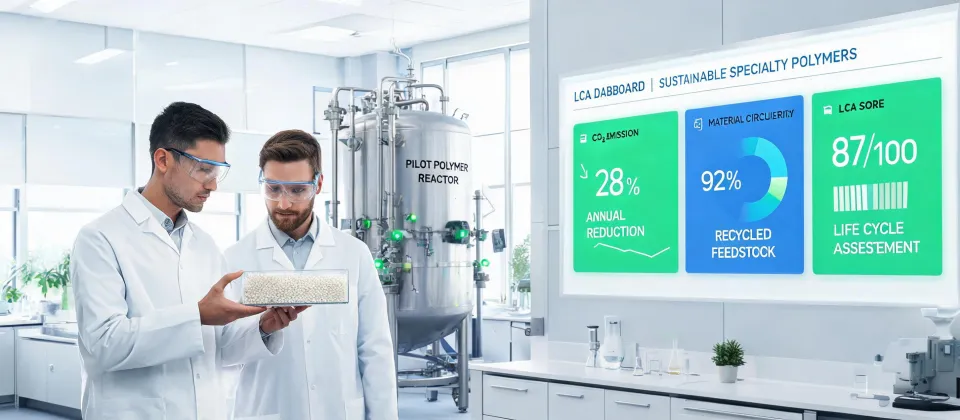
The vision is managed as an operating program rather than a slogan. Each target below is framed with a reference method or governance mechanism so customers can evaluate relevance for their own qualification, procurement, and sustainability reporting workflows.
| Target | 2024 status | 2030 goal |
|---|---|---|
| Scope 1 and 2 emissions | Reduction roadmap reviewed against ISO 14064 inventory controls | 60% lower CO2e intensity for selected operations |
| Circular feedstock adoption | Mass-balance trials and recycled polymer streams under qualification | 30% circular or bio-attributed feedstock in priority lines |
| Water stewardship | High-consumption sites mapped with reuse and discharge monitoring | Site-specific reduction plans for priority watersheds |
| Product transparency | SDS, TDS, and regulatory statement workflows digitized by market | Faster document access for qualified product families |
Solvay prioritizes polymer systems where recycled, bio-attributed, or lower-carbon inputs can be documented without reducing the test envelope required by demanding applications.
High-temperature, chemical-resistant, and lightweight materials are supported by application labs that use repeatable methods such as tensile testing, DSC, TGA, viscosity, and migration analysis when relevant.
Digital product discovery, document baskets, and supply planning reduce friction for global engineering teams that must align procurement, compliance, and production schedules.
Operating temperature, chemical exposure, mechanical target, region, and regulatory constraints are captured before material options are proposed.
Candidate polymer families are compared using method-based data rather than general claims.
Samples, processing windows, and documentation are reviewed with manufacturing conditions in mind.
Supply continuity and change-control expectations are discussed before production approval.
Performance, circular content, and handling guidance are revisited as the program matures.
Use this page as a starting point for portfolio conversations, application screening, and ESG documentation alignment.